Disclaimer: This content is not meant to provide legal advice. We do our best to provide accurate information, but please conduct your own research before transacting and consider talking to a qualified professional about your unique circumstances. All third-party websites referenced/linked on this page are the property of their respective owners and do not constitute or imply endorsement, sponsorship, or recommendation of Carvana.


Guide to buying a used electric vehicle
Don’t get shocked: checking the battery size and range
Battery size is a critical factor for determining an electric vehicle’s range. Battery size is measured in kWh (kilowatt-hour, or how much power a device can use in an hour), and in general, the larger the battery, the better the vehicle range. Many of today’s EVs are capable of traveling over 200 miles on a single charge! Some automakers also offer battery warranties up to a certain number of miles and/or years.
Check the basics: history, condition and mileage

Vehicle history
Check the vehicle’s auto history report using CarFax® or AutoCheck®, which may include accidents, repairs and maintenance records that the previous owners recorded. This information can give you a better understanding of the car’s condition.

Mileage
Although EVs generally have fewer moving parts than gas-powered cars, mileage still matters. An EV with 100,000 miles might have more battery degradation than one with fewer miles, negatively affecting its range and performance.

Interior and exterior condition
Check for any signs of damage or wear and tear, both inside and outside the vehicle. A used EV with a well-maintained interior and no signs of exterior damage is more likely to provide a trouble-free ownership experience. Carvana makes it easy to virtually tour the inside and outside of the vehicle.
Charging an EV
Many EV owners will want to install an EV charger at home for easy access to charging. If you’re one of them, you should know that EV charging at home is typically split out into levels: Level 1 and Level 2. Level 3 charging (typically split into DC Fast Charging and Supercharging) is only available at public charging stations.
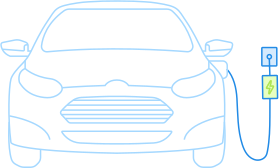
Level 1
Level 1 charging uses a standard 120-volt outlet, like what you would charge your phone with. This type of charging takes a long time though—around 40 hours for an EV!
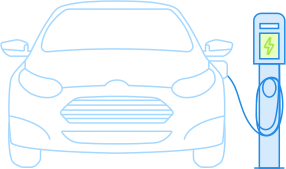
Level 2
Level 2 charging uses a 240-volt outlet, such as what you’d see for an electric dryer. Level 2 charging will charge about ten times faster than Level 1, so most EV owners choose to have a Level 2 charger installed.
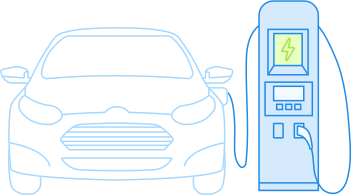
Level 3
Level 3 charging either uses a DC Fast Charger or a Tesla Supercharger. They can charge up 3 to 20 miles in a minute, whereas Level 2 charging can only deliver 12 to 80 miles per hour. That’s a significant difference!
For most people, a Level 2 charger works perfectly well. If you can plan out charging ahead of time, even a Level 1 charger can work. If you do decide to spring for a Level 3 charger, keep in mind that you’ll still want to use Level 1 and Level 2 chargers from time to time — using only Level 3 charging can expedite EV battery degradation. Speaking of battery degradation, we recommend consistently charging your battery up to 80% to maintain its health.
Finding a used EV that suits your lifestyle
Ensuring your used EV matches your lifestyle is just as important as getting a good deal. Here are a couple of things to look into:

Vehicle range
Determine whether the car’s range meets your daily driving needs. The average American drives between 30-40 miles a day, which plenty of reliable commuter EVs can handle easily.
Charging infrastructure
Research the availability of charging stations in your area, as well as any associated expenses. For example, if you live in a city with a well-developed charging network, a used EV with a less extensive range may suit your needs just fine. On the other hand, if you live in an area with limited charging station availability, you might want to opt for something with more range, or even install an EV charger in your home.
From battery to bumper, get your EV inspected
No matter where you buy your used EV or how confident you are in the manufacturer, verify the vehicle’s inspection details before purchase. All Carvana vehicles go through vehicle quality inspection so that you can feel confident in the quality of your car.
Recap: your used EV checklist
Battery size and range
A larger battery can provide a longer range, but factors such as vehicle weight, temperature and driving conditions can influence range
Vehicle history
Check the vehicle’s CarFax® or AutoCheck® report to assess the car’s condition
Mileage
Be cautious of high-mileage EVs, as battery degradation may be more significant
Charging infrastructure
Research the availability and costs of charging stations in your area
Inspection
Check the inspection report to uncover any potential issues
Battery size and range
A larger battery can provide a longer range, but factors such as vehicle weight, temperature and driving conditions can influence range
Vehicle history
Check the vehicle’s CarFax® or AutoCheck® report to assess the car’s condition
Mileage
Be cautious of high-mileage EVs, as battery degradation may be more significant
Charging infrastructure
Research the availability and costs of charging stations in your area
Inspection
Check the inspection report to uncover any potential issues
Armed with the knowledge and insights we’ve provided, you’ll be ready to confidently navigate the used EV market and make an informed decision for your next purchase. Happy driving!